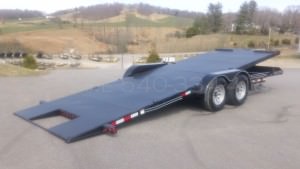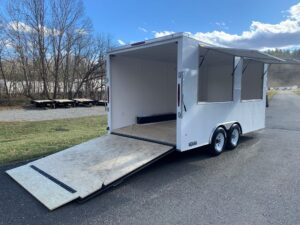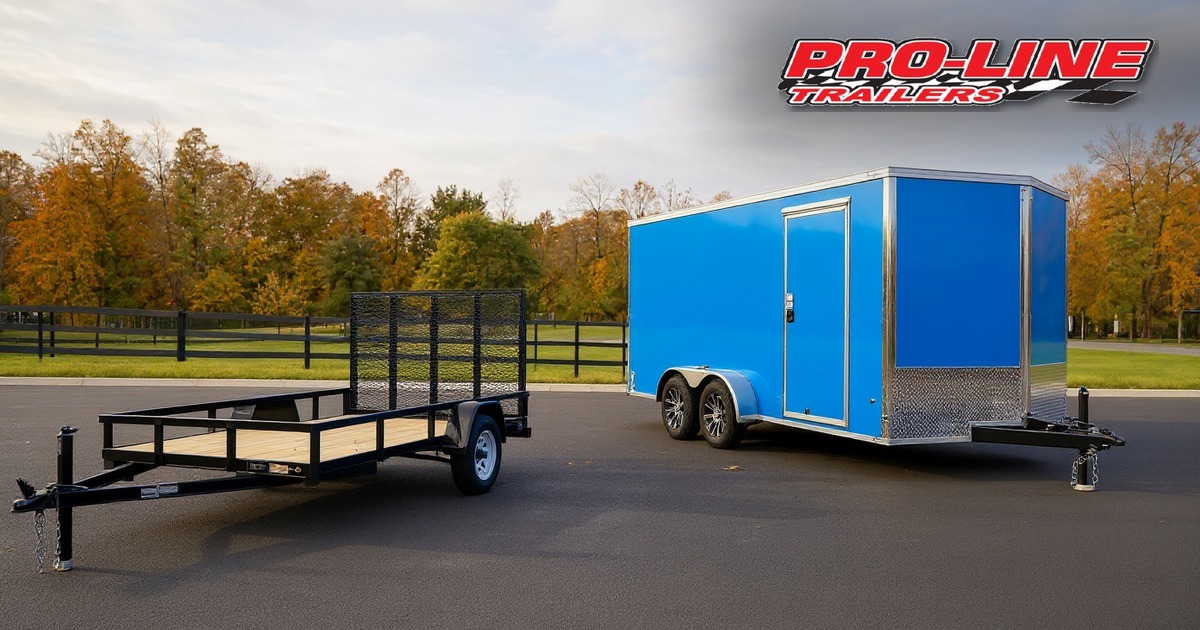
A trailer can look right on the lot and still be wrong six months later. Fuel use, weather, storage, maintenance, security, and the work you do all show up after the paperwork. An open trailer can be the sensible tool for one owner and a constant compromise for another; an enclosed trailer can protect a business or become more trailer than someone needs. Neither is universally better.
The purchase is only the first cost
Open trailers often have a lower upfront cost than comparable enclosed trailers. They use less material and have less structure to maintain. That matters if the trailer will haul equipment, materials, or a vehicle on predictable trips and then sit.
An enclosed trailer costs more because it adds walls, roof, doors, and interior space. It may earn its keep if you routinely buy tarps, move tools in and out of a truck, rent storage, or lose time securing gear.
Count the friction each option removes
The practical value of a trailer is not limited to what it costs on purchase day. Think about the repeated friction each option creates or removes: covering a load, unloading tools every night, searching for equipment, working around a bad ramp angle, finding indoor storage, or towing more trailer than the job requires.
A buyer who takes landscaping equipment to the same sites every day may value quick side access more than enclosed storage. A contractor whose trailer is a rolling tool room may accept the added cost and towing profile for a locked, organized interior. Identify the repeated ownership friction, then decide whether the trailer removes enough of it to be worth the tradeoff.
Towing and fuel: look at the whole setup
Trailer weight, height, load, route, tow vehicle, and driving habits affect towing. An open trailer usually presents less wind resistance than an enclosed trailer, particularly at highway speed. That can be easier on fuel and less demanding behind a tow vehicle near its comfortable working range.
An enclosed trailer has more frontal area and added weight. The tow vehicle, hitch setup, payload, brakes, tires, and intended load need to match it.
Open trailers create their own routine. Tools, boxes, and lightweight materials must be secured against wind and road movement. Count covering and tie-down time as part of ownership. Enclosed trailers reduce that exposure, but they do not eliminate the need to secure cargo inside.
Loading access often decides the issue
Open trailers work well when the load needs room from the side or above. A forklift or machine operator may have an easier time loading an open deck than working around walls and a roof. Long material may extend beyond the deck when it is properly secured and legal to transport.
Enclosed trailers trade some access for protection and containment. Rear doors or a ramp can create a clean path when the same equipment goes in and out repeatedly. The interior gives you a defined place for shelves, tie-downs, cabinets, and separated gear.
Think through the first stop and the awkward middle stop where one item is buried behind another. A landscaping crew unloading mowers has different needs from a contractor carrying saws and hand tools.
Weather, security, and organization
An open trailer puts the load outside. Rain, sun, road spray, dust, and falling debris are part of the deal. Some loads handle that without trouble. Others need covers, sealed containers, or a different plan when the forecast turns.
An enclosed trailer protects tools, inventory, finished materials, and gear that is hard to dry out. Wet equipment, poor ventilation, and neglected seals can still create problems.
A lockable enclosed trailer keeps tools and supplies out of casual view, but it does not replace sensible parking, locks, or insurance. An open trailer leaves the load visible and needs more thought about overnight parking.
For a crew that needs the same tools ready at 6 a.m., shelves and bins can save time at every stop. An enclosed trailer also provides a clean surface for a company name and phone number. Branding should support the work, not drive the purchase.
Maintenance, storage, and the next owner
Both types need tire checks, bearing and brake service where equipped, lights, coupler and safety-chain inspection, deck or floor care, and attention to fasteners and rust. Pro-Line Trailers offers parts, service, and repair support in Rocky Mount for owners who need help keeping a trailer road-ready.
An enclosed trailer adds roof seams, doors, hinges, latches, and seals to inspect. An open trailer has fewer enclosure components, but its deck and exposed parts face the elements directly. An enclosed trailer also takes up more space because of its height; an open trailer may be easier to place, but stored equipment remains exposed.
Resale depends on condition, configuration, maintenance history, and local demand. One style does not always hold value better. Changing loads may favor an open deck; protected cargo space may support a growing business.
Open vs. enclosed trailer decision table
Upfront cost
Open trailer: You need a simpler trailer for exposed loads and want to keep the initial purchase lower.
Enclosed trailer: You can justify paying more for the enclosure and the way you will use it.
Fuel and towing profile
Open trailer: You prefer a lower-profile trailer and your loads do not need walls or a roof.
Enclosed trailer: Your tow vehicle and setup are matched to the added size, weight, and wind exposure.
Loading access
Open trailer: You need side, overhead, or flexible access for equipment and materials.
Enclosed trailer: You load through a ramp or rear doors and value a defined interior layout.
Weather
Open trailer: Your cargo tolerates exposure or can be covered securely.
Enclosed trailer: Tools, inventory, finished goods, or gear need regular protection from the elements.
Security
Open trailer: You unload after use and can control where the trailer is parked.
Enclosed trailer: You need lockable, out-of-sight storage during workdays or between stops.
Organization and branding
Open trailer: A clear deck and simple setup fit the job.
Enclosed trailer: Shelving, bins, and a branded exterior would make the trailer more useful.
Maintenance and storage
Open trailer: You want fewer enclosure components and have room for an open deck.
Enclosed trailer: You will inspect seals and doors and have space for the trailer’s height and footprint.
Future usefulness
Open trailer: Your likely work involves changing equipment and material loads.
Enclosed trailer: Protected cargo space could support the way your work or business is growing.
Make the choice around your routine
Tell the team what you haul, the tow vehicle you use, where you park, how often cargo stays loaded, and what frustrates you about your current setup.
Also say how quickly you need to decide and how much guidance you want. A buyer replacing a familiar open trailer may want a direct path to an available unit. A contractor building an enclosed mobile workspace may need photos, measurements, layout decisions, a detailed quote, and realistic production timing.
A direct process works when the buyer knows the size, configuration, and timing that fit the job. A higher-guidance process works when the load, layout, budget, or production window still needs to be worked out. Neither buyer is better; they are choosing the level of help the ownership decision requires.
Browse Pro-Line Trailers inventory or call (540) 334-4182 to talk through an open or enclosed trailer that fits the work you are doing now.