A great weekend at Virginia International Raceway starts before you ever hit the track.
It starts when you load the trailer.
Whether you are bringing a race car, motorcycle, kart, tools, gear, or vendor setup, your trailer should help you show up organized, safe, and ready. A good trailer does more than haul your equipment. It protects your investment, keeps your paddock cleaner, and helps you solve problems fast when the weekend gets busy.
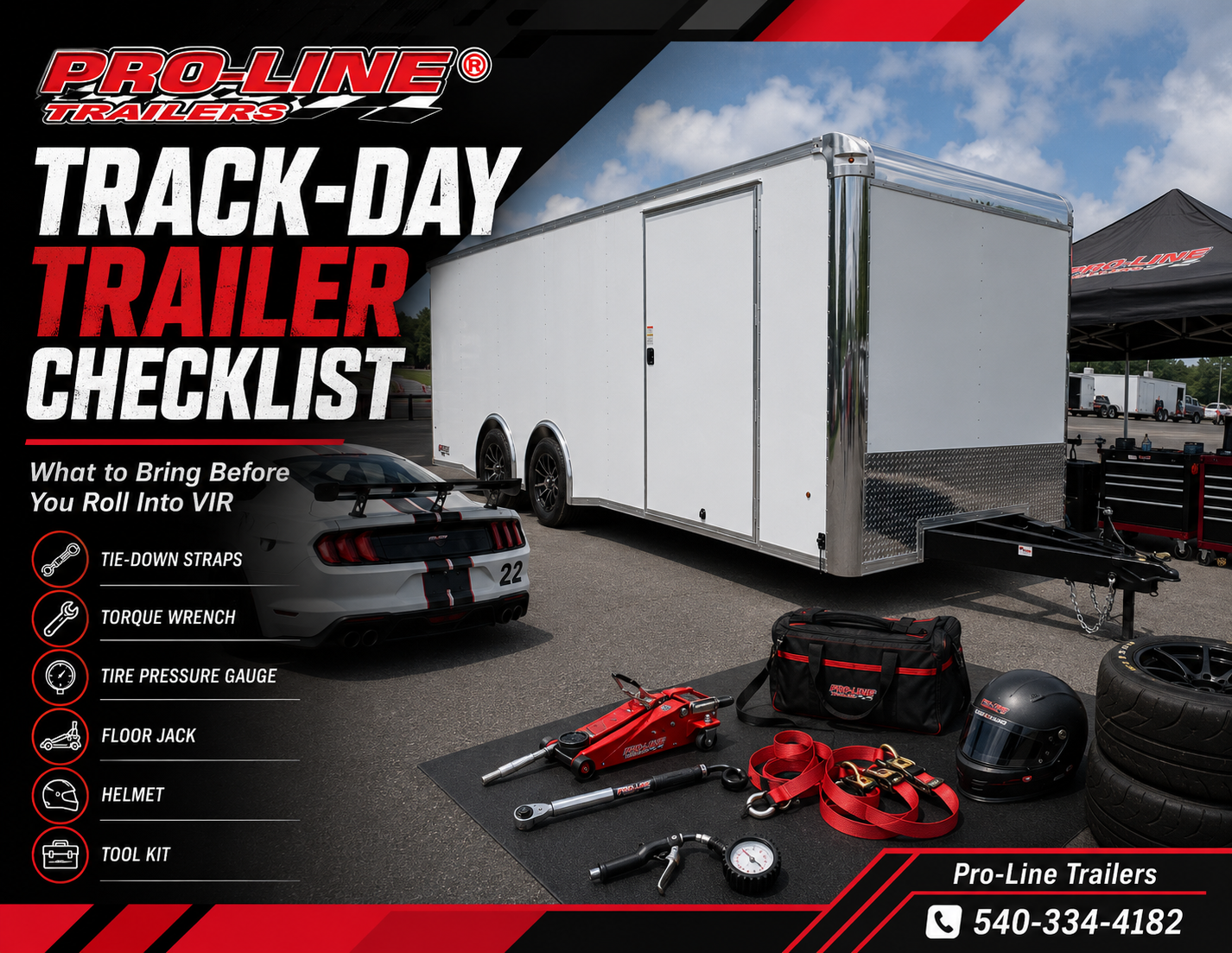
Quick VIR Track-Day Trailer Checklist
Before you roll into VIR, make sure your trailer has:
- Tie-down straps
- Wheel chocks
- Torque wrench
- Tire pressure gauge
- Jack and jack stands
- Spare trailer tire
- Basic tool kit
- Fluids
- Battery jump pack
- Air compressor
- Extension cords
- Helmet and safety gear
- Canopy or shade setup
- First-aid kit
- Trailer spare parts
- Rain gear
- Cleaning supplies
That list covers the basics. The full setup depends on what you haul, how far you travel, and how serious your track weekend gets.
1. Load & Tie-Down Gear
Your first job is getting to VIR safely.
Pack:
- Ratchet straps rated for your load
- Axle straps or wheel straps
- Wheel chocks
- Soft loops for motorcycles
- Gloves
- Flashlight or headlamp
- Spare strap
Check your straps before every trip. Look for fraying, cuts, bent hooks, and weak ratchets. If a strap looks questionable, replace it.
Do not gamble with the vehicle you spent real money building.
2. Tire & Wheel Tools
Track weekends punish tires. Trailer tires matter too.
Pack:
- Tire pressure gauge
- Torque wrench
- Breaker bar
- Correct lug socket
- Portable air compressor
- Spare trailer tire
- Jack and jack stands
Before you leave, check trailer tire pressure, lug torque, tread condition, sidewalls, and the spare tire. Many trailer problems start with tires that looked “fine” in the driveway.
3. Track Tools
You do not need to bring the whole garage, but you need enough to handle common problems.
Pack:
- Socket set
- Wrenches
- Screwdrivers
- Pliers
- Utility knife
- Zip ties
- Duct tape
- Shop towels
Small tools save big weekends. One loose bolt, damaged panel, weak connection, or quick adjustment can cost you a session if the right tool stayed at home.
4. Fluids & Maintenance Supplies
Bring what your vehicle may need during a long weekend.
Common items include:
- Engine oil
- Brake fluid
- Coolant
- Brake cleaner
- Chain lube for motorcycles
- Funnel
- Spray lubricant
Store fluids upright in a bin or cabinet. Loose bottles rolling around the trailer create messes, waste time, and damage other gear.
5. Safety Gear
Keep safety gear protected, dry, and easy to grab.
Pack:
- Helmet
- Gloves
- Driving shoes or riding boots
- Suit, jacket, or required event gear
- Eye protection
- Ear protection
- Rain gear
- First-aid kit
An enclosed trailer makes this much easier. Cabinets, shelves, hooks, and bins help keep expensive gear clean and ready.
6. Electrical & Charging Gear
Modern track weekends run on power.
Pack:
- Extension cords
- Power strip
- Battery jump pack
- Battery charger
- Phone chargers
- Camera chargers
- Extra batteries
- LED work light
Label your cords and chargers. It keeps your setup cleaner and prevents gear from disappearing into someone else’s paddock pile.
7. Paddock Comfort
Comfort keeps your crew sharper.
Pack:
- Canopy
- Folding chairs
- Cooler
- Table
- Trash bags
- Towels
- Portable fan
- Change of clothes
Comfort does not mean luxury. It means shade, water, clean gear, and a place to regroup between sessions.
8. Trailer Spare Parts
Do not focus only on the car or motorcycle. Your trailer still has to get home.
Pack:
- Spare trailer tire
- Extra lug nuts
- Spare fuses
- Light repair kit
- Electrical connector adapter
- Coupler lock or spare safety pin
- Extra bungee cords
- Extra tie-down strap
Before the trip, inspect the coupler, safety chains, lights, brakes, ramp door, jack, tires, and breakaway system.
Open Trailer vs. Enclosed Trailer vs. Race Trailer
The right trailer depends on your setup.
| Trailer Type | Best For | Main Advantage | Main Trade-Off |
|---|---|---|---|
| Open trailer | Simple track-day hauling | Lower cost and easier towing | Less protection |
| Enclosed trailer | Cars, motorcycles, tools, and gear | Weather protection and secure storage | Requires more tow vehicle |
| Race trailer | Serious motorsports use | Built for cars, cabinets, winches, and paddock needs | Costs more upfront |
If you only haul occasionally and travel light, an open trailer may work.
If you visit VIR often, bring expensive gear, travel in bad weather, or stay overnight, an enclosed trailer can make the weekend much easier.
Common Trailer Mistakes Before a Track Weekend
Avoid these mistakes:
- Buying a trailer that barely fits the car
- Forgetting about ramp angle
- Ignoring payload capacity
- Using worn straps
- Skipping tire and brake checks
- Leaving tools loose inside the trailer
- Treating storage as an afterthought
A trailer should match your vehicle, your gear, your tow vehicle, and your real use. Do not buy based on price alone. Buy based on the job.
What to Look For in a VIR-Ready Trailer
Before you buy or upgrade a trailer for track use, check:
- Interior length
- Interior width
- Door opening height
- Ramp angle
- Tie-down locations
- Axle rating
- Brake setup
- Tire rating
- Interior lighting
- Storage options
- Winch options
- Side door placement
- Tow vehicle match
A good trailer setup makes loading easier, protects your equipment, and keeps the weekend moving.
How Pro-Line Trailers Can Help
Pro-Line Trailers helps drivers, riders, race teams, vendors, contractors, and weekend haulers find trailers that fit real use.
If you are preparing for VIR, the Pro-Line team can help you choose:
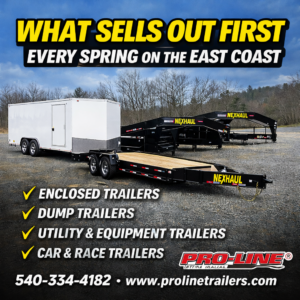
- Open trailers
- Enclosed trailers
- Race trailers
- Car haulers
- Storage upgrades
- Tie-down setups
- Trailer parts
- Service support
- Financing options
Before your next VIR weekend, call Pro-Line Trailers and ask which trailer setup fits your vehicle, gear, tow vehicle, and budget.
FAQ: VIR Track-Day Trailer Prep
What should I bring in my trailer for a VIR track day?
Bring tie-down straps, wheel chocks, tire tools, a jack, spare trailer tire, basic tools, fluids, safety gear, chargers, canopy, first-aid kit, and trailer spare parts.
Do I need an enclosed trailer for VIR?
You do not always need one, but an enclosed trailer helps protect your vehicle, tools, safety gear, and supplies from weather and theft. It also gives you better storage for longer weekends.
What should I check on my trailer before leaving?
Check tire pressure, lug torque, lights, brakes, coupler, safety chains, ramp door, jack, tie-down points, breakaway system, and spare tire.
Is an open trailer enough for track days?
An open trailer can work well for simple hauling and lighter travel. If you carry tools, tires, gear, and expensive equipment, an enclosed trailer usually makes more sense.
What trailer accessories help most at the track?
Can Pro-Line help me choose a race trailer?
Yes. Pro-Line can help match the trailer to your vehicle, gear, towing setup, budget, and track-weekend needs.
Ready Before the Green Flag
Your VIR weekend should not fall apart because you forgot a strap, brought the wrong jack, or outgrew your trailer.
Build the setup before the weekend starts.
Call Pro-Line Trailers, view current inventory, or visit Pro-Line Trailers in Rocky Mount, VA to find the trailer that fits the way you work, race, travel, and play.