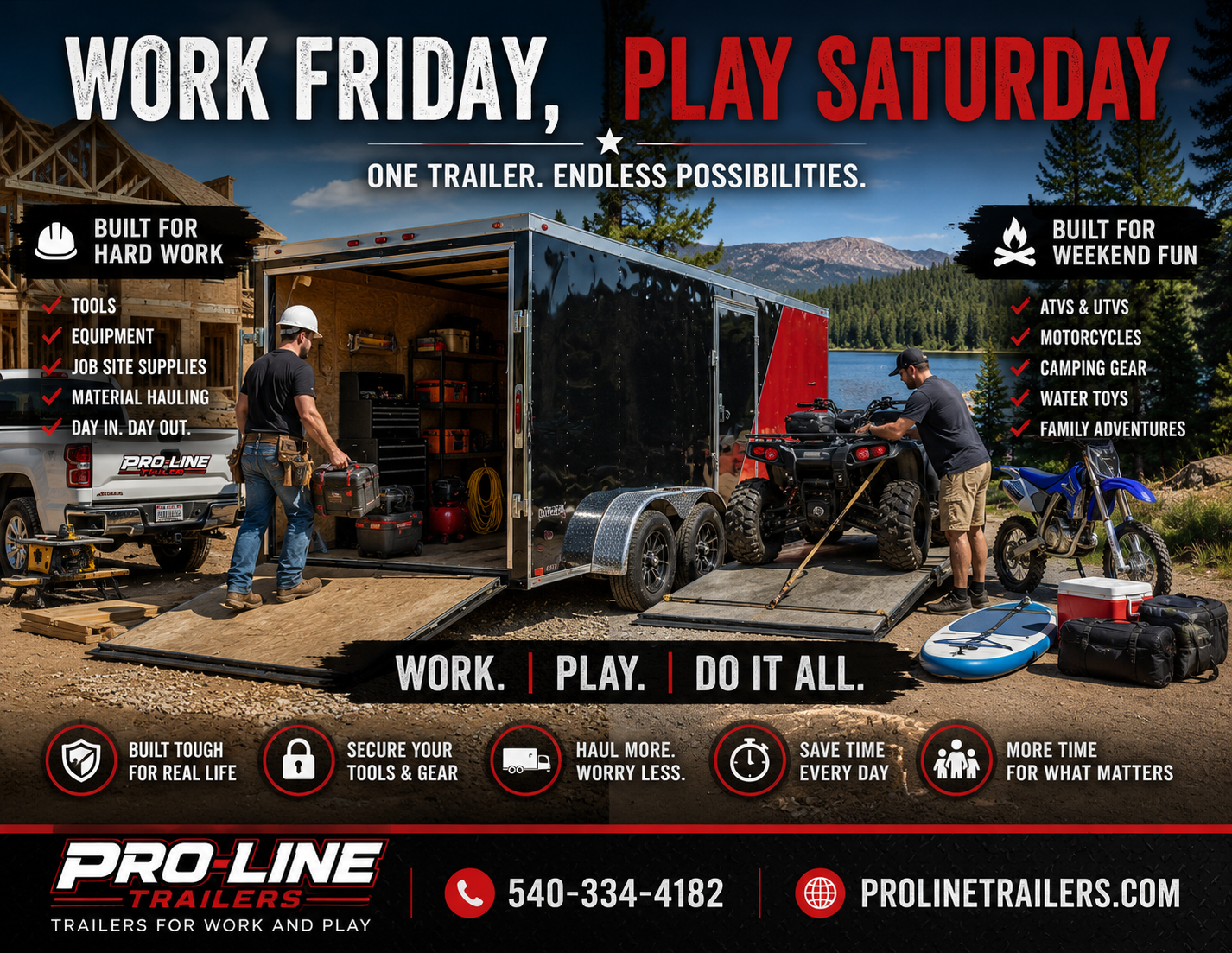
Most trailer buyers do not live in one lane.
You may haul tools during the week and ATVs on the weekend. You may use a trailer for landscaping jobs on Friday, then load motorcycles, furniture, camping gear, or project supplies on Saturday. You may run a small business during the day and haul race gear, hunting gear, or home improvement materials after hours.
That is real life.
The problem starts when buyers choose a trailer for only one use and forget everything else they need it to handle.
A trailer that works great for Saturday fun may fall short on Monday morning. A trailer that works for a jobsite may not protect family gear, vehicles, or weekend toys. A trailer that looks affordable today may become too small, too light-duty, or too limited before the year ends.
The goal is simple: choose a trailer that fits your work, your weekends, your tow vehicle, your storage needs, and your future plans.
That is how you buy the right trailer once.
The Direct Answer: What Trailer Works for Both Work and Play?
The best work-and-play trailer depends on what you haul most often, how much weight you carry, and whether you need open access or enclosed protection.
For many buyers, utility trailers, enclosed trailers, car haulers, ATV trailers, equipment trailers, dump trailers, and race trailers can all serve double-duty roles. The right choice depends on your mix of weekday work and weekend use.
A good dual-use trailer should match:
- Your heaviest regular load
- Your towing vehicle
- Your loading style
- Your storage needs
- Your weather protection needs
- Your security needs
- Your weekend activities
- Your business or household projects
- Your long-term plans
Do not start with the trailer. Start with the job.
Then ask what else that trailer needs to do when the workweek ends.
Why Dual-Use Trailer Buying Matters
A trailer should make life easier.
When you buy the wrong setup, you feel it fast.
You may need extra trips. You may fight loading angles. You may leave tools exposed. You may overload the trailer. You may struggle to secure equipment. You may realize your mower fits, but your ATV does not. You may find out the trailer works for work, but fails for family, racing, hunting, camping, or weekend projects.
That gets expensive.
A smarter trailer choice can help you:
- Save money by avoiding a fast upgrade
- Haul more safely
- Protect tools and cargo
- Keep weekend gear organized
- Support a business and a lifestyle
- Reduce rental costs
- Make fewer trips
- Get more use from one trailer
- Match the trailer to real life instead of one narrow job
The best trailer does not just fit what you do today. It gives you room to grow.
Start With Your Main Use
Every buyer needs to answer this question first:
What will this trailer do most often?
Your main use should drive the decision. Your second use should shape the features.
If you use the trailer for work five days a week and recreation twice a month, choose the trailer around work first. If you mostly need it for ATVs, motorcycles, home projects, and occasional side jobs, choose a setup that fits those weekend loads but can still handle work when needed.
Ask These Questions Before You Buy
- What will I haul every week?
- What will I haul on weekends?
- What is the heaviest thing I expect to load?
- Do I need weather protection?
- Do I need tool security?
- Do I need a ramp, rear door, side door, or open deck?
- Will my trailer sit loaded overnight?
- How much interior height or deck space do I need?
- Can my tow vehicle safely handle the trailer loaded?
- Will this trailer still make sense two years from now?
These questions beat guessing.
Enclosed Trailers: Best for Protection and Versatility
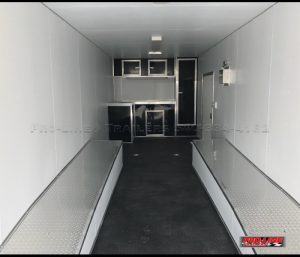
Enclosed trailers work well for buyers who need protection, security, and flexible storage.
They can support contractors, mobile service businesses, racers, motorcycle owners, homeowners, campers, and families who need to keep cargo out of weather.
Good work uses:
- Contractor tools
- Power equipment
- Mobile service gear
- Paint, parts, and supplies
- Event equipment
- Small business inventory
- Trade show gear
Good weekend uses:
- Motorcycles
- ATVs
- Camping supplies
- Race gear
- Furniture
- Sports equipment
- Hunting gear
- Family travel supplies
What to check:
- Interior height
- Interior width
- Ramp door strength
- Side door location
- Tie-down points
- Flooring
- Wall strength
- Lighting
- Ventilation
- Shelving options
- Axle capacity
- Brakes
Best fit:
Choose an enclosed trailer if you want one trailer that can protect weekday tools and weekend gear.
Watch-out:
Do not buy too small. Enclosed trailers fill up fast once you add shelves, tools, gear, and machines.
Utility Trailers: Best for Simple, Flexible Hauling
Utility trailers work well for buyers who need easy loading and open access.
They fit homeowners, landscapers, farmers, small business owners, side hustlers, and weekend haulers who move different kinds of cargo.
Good work uses:
- Lawn equipment
- Mulch
- Lumber
- Small machines
- Jobsite materials
- Trash and cleanup loads
- Tools and supplies
Good weekend uses:
- ATVs
- Mowers
- Furniture
- Appliances
- Firewood
- Home project materials
- Outdoor gear
What to check:
- Deck size
- Payload capacity
- Ramp gate strength
- Tie-down points
- Side rail height
- Axle setup
- Brakes
- Tire rating
- Flooring
- Gate style
Best fit:
Choose a utility trailer if you need a simple, open trailer that can handle many different jobs.
Watch-out:
Open trailers do not protect cargo from weather or theft. If you carry expensive tools or equipment, think hard before you skip enclosed protection.
Car Haulers and Race Trailers: Best for Vehicle Owners
Car haulers and race trailers serve buyers who need to move vehicles safely.
They also support work needs when buyers haul equipment, machines, or project vehicles.
Good work uses:
- Shop vehicles
- Small equipment
- Project cars
- Business vehicles
- Mobile repair setups
- Machines that need strong ramps
Good weekend uses:
- Race cars
- Classic cars
- Off-road vehicles
- Motorcycles
- Track gear
- Car show travel
What to check:
- Deck length
- Deck width
- Ramp angle
- Tie-down placement
- Winch options
- Axle capacity
- Brake system
- Interior height if enclosed
- Door opening
- Flooring
- Tool storage
Best fit:
Choose a car hauler or race trailer if weekends involve vehicles, tracks, shows, or motorsports.
Watch-out:
Measure the vehicle before you buy. Width, height, wheelbase, ground clearance, and door clearance all matter.
Dump Trailers: Best for Heavy Work and Weekend Projects
Dump trailers often serve buyers who work hard during the week and tackle big projects on weekends.
They help contractors, landscapers, property owners, farmers, cleanup crews, and homeowners.
Good work uses:
- Gravel
- Mulch
- Brush
- Dirt
- Construction debris
- Roofing waste
- Landscaping material
- Jobsite cleanup
Good weekend uses:
- Firewood
- Yard cleanup
- Home renovation debris
- Property maintenance
- Driveway material
- Farm chores
What to check:
- Payload capacity
- Dump angle
- Hydraulic system
- Battery condition
- Side height
- Gate style
- Tarp system
- Floor strength
- Axles
- Brakes
Best fit:
Choose a dump trailer if you haul material that needs fast unloading.
Watch-out:
Material gets heavy fast. Dirt, gravel, wet mulch, shingles, and concrete can overload a trailer quicker than buyers expect.
Equipment Trailers: Best for Machines and Heavy Jobs
Equipment trailers fit buyers who haul machinery for work, property maintenance, farming, construction, and weekend projects.
Good work uses:
- Skid steers
- Compact tractors
- Mini excavators
- Trenchers
- Attachments
- Construction equipment
- Farm equipment
Good weekend uses:
- Property machines
- Large ATVs
- Side-by-sides
- Project equipment
- Farm and land maintenance gear
What to check:
- Payload rating
- Axle rating
- Deck length
- Deck width
- Ramp style
- Tie-down points
- Brake system
- Frame strength
- Hitch type
- Tow vehicle match
Best fit:
Choose an equipment trailer when machines or heavier loads play a regular role.
Watch-out:
Do not choose based only on machine weight. Add attachments, fuel, chains, buckets, tools, and anything else you carry.
Quick Work-and-Play Trailer Comparison
| Trailer Type | Best Work Use | Best Weekend Use | Key Buying Concern |
|---|---|---|---|
| Enclosed trailer | Tools, supplies, mobile business gear | Motorcycles, camping gear, race supplies | Interior size and payload |
| Utility trailer | Landscaping, jobsite materials, general hauling | ATVs, furniture, home projects | Weather exposure and security |
| Car hauler | Shop vehicles, project cars, equipment | Race cars, classic cars, motorsports | Ramp angle and tie-downs |
| Dump trailer | Debris, mulch, gravel, cleanup | Yard projects, firewood, property work | Payload and material weight |
| Equipment trailer | Machines, tractors, construction gear | Property equipment, side-by-sides | Tow vehicle match |
| Race trailer | Vehicle transport, shop support | Track days, car shows, racing | Interior layout and storage |
New or Used for Work and Play?
New and used trailers can both make sense.
The right answer depends on how often you use the trailer, how much you haul, how long you plan to keep it, and how much maintenance risk you can tolerate.
A new trailer may make sense if:
- You use it for work every week
- You want warranty coverage
- You need financing
- You need specific features
- You want a clean business image
- You plan to keep it long-term
- You want fewer unknowns
A used trailer may make sense if:
- You want to control cost
- You only need occasional use
- You found one in strong condition
- You need a second trailer
- You want to upgrade from renting
- You can inspect it carefully
What to check on a used trailer:
- Frame
- Axles
- Tires
- Bearings
- Brakes
- Lights
- Wiring
- Coupler
- Safety chains
- Floor
- Ramp
- Doors
- Roof
- Rust
- Previous repairs
Do not buy used just because the price looks good. A cheap trailer with hidden issues can cost more than a better trailer from the start.
Should You Finance a Dual-Use Trailer?
Financing may make sense when one trailer supports both income and personal use.
A contractor who uses an enclosed trailer for tools during the week and motorcycles on the weekend may get more value from one better trailer than from two cheaper compromises. A landscaper who uses a utility trailer for work and home projects may benefit from the right size now instead of upgrading later.
Before financing, ask:
- Will this trailer help me earn money?
- Will it save me rental costs?
- Will it reduce wasted trips?
- Will it protect valuable tools or gear?
- Will it fit both work and weekend needs?
- Will the payment fit my budget?
- Will I keep this trailer long enough to justify it?
Do not stretch for features you do not need. But do not underbuy so badly that the trailer slows you down.
Ask Pro-Line Trailers about financing options before you settle for the wrong setup.
Buyer Mistakes to Avoid
Mistake 1: Buying for One Weekend
A trailer should fit more than one trip.
Think about work, family, home projects, business needs, recreation, and future use before you buy.
Mistake 2: Buying Too Small
Buyers often outgrow trailers faster than they expect.
Add room for gear, tools, shelves, machines, spare equipment, and future needs.
Mistake 3: Ignoring Payload
Size and strength are not the same thing.
A trailer can have enough space but not enough payload capacity. Know the weight before you load.
Mistake 4: Forgetting the Tow Vehicle
Your truck must safely control the loaded trailer.
Check towing capacity, payload, hitch rating, brake controller needs, tongue weight, and trailer brakes.
Mistake 5: Choosing Open When You Need Protection
Open trailers work great for many jobs.
But if you haul expensive tools, inventory, motorcycles, electronics, or gear that cannot sit in weather, enclosed may make more sense.
Mistake 6: Skipping Service Support
A trailer that works hard needs maintenance.
Tires, bearings, brakes, lights, wiring, ramps, doors, jacks, and couplers all need attention over time.
Mistake 7: Forgetting Parts and Accessories
A trailer becomes more useful with the right setup.
Racks, straps, tie-downs, lights, wheel chocks, spare tires, tool storage, locks, hitch parts, and ramp hardware can make a big difference.
What to Look For Before You Buy
Before choosing a trailer, check these areas.
Size
Measure what you haul. Then think about extra room.
Do not forget handles, attachments, ramps, doors, toolboxes, and storage.
Payload
Know your real loaded weight.
Include tools, gear, fuel, attachments, cargo, and add-ons.
Loading
Make sure the ramp, gate, tilt deck, or door style fits what you load most often.
Security
If the trailer holds tools, machines, motorcycles, inventory, or expensive gear, think through locks, enclosed protection, and storage.
Weather Protection
Rain, sun, heat, snow, and road grime can beat up cargo.
Choose enclosed protection when the load deserves it.
Access
Side doors, rear doors, ramp doors, barn doors, and open decks all change how the trailer works day to day.
Brakes
Heavier trailers need stopping control.
Make sure your tow vehicle and trailer braking system match the load.
Storage
Shelves, racks, cabinets, tie-downs, and toolboxes can turn a basic trailer into a better system.
Maintenance
Plan for tires, bearings, brakes, lights, wiring, floor care, ramp hardware, and hitch components.
The Pro-Line Advantage
Pro-Line Trailers serves buyers who need trailers for work and play.
That matters because many trailer owners do not need a one-purpose solution. They need options, guidance, financing, trade-ins, service, parts, and support after the sale.
Pro-Line can help buyers compare:
- Enclosed trailers
- Utility trailers
- Dump trailers
- Equipment trailers
- Car haulers
- Race trailers
- Gooseneck trailers
- Preowned trailers
- Custom trailer options
Pro-Line also supports buyers with service, repair, hitch installation, parts, accessories, financing options, and trade-in conversations.
That means you can get help before the sale and after the sale.
Need help choosing the right setup? Call
Work Friday, Play Saturday Buying Checklist
Bring this list with you before you buy.
- Main weekday use
- Main weekend use
- Heaviest expected load
- Equipment dimensions
- Vehicle or machine measurements
- Tow vehicle rating
- Storage needs
- Weather protection needs
- Security needs
- Ramp or door needs
- Tie-down needs
- Financing questions
- Parts and accessory needs
- Service expectations
- Future growth plans
A better conversation creates a better trailer choice.
FAQ
What is the best trailer for both work and weekends?
The best choice depends on what you haul most often. Enclosed trailers work well for tools and protected weekend gear. Utility trailers work well for flexible open hauling. Car haulers, dump trailers, and equipment trailers fit more specific work-and-play needs.
Should I buy an enclosed trailer or a utility trailer?
Choose an enclosed trailer when you need protection from weather, theft, or road debris. Choose a utility trailer when you need open access, easy loading, and flexible hauling for equipment, materials, and weekend projects.
Can one trailer handle both business and personal use?
Yes, but only if you choose the right size, payload, loading setup, and features. Start with your main use, then make sure the trailer also fits your second use.
What trailer works best for ATVs and work equipment?
A utility trailer may work well for ATVs and lighter work equipment. An enclosed trailer may work better if you want protection. An equipment trailer may make more sense for heavier machines.
Is it better to buy new or used?
Buy new if you need daily reliability, specific features, financing, or warranty coverage. Buy used if the condition fits the job and you want to control cost. Always inspect used trailers carefully.
Can Pro-Line help me compare trailer options?
Yes. Call Pro-Line Trailers and explain what you haul for work, what you haul on weekends, and what vehicle you tow with. The team can help you compare options.
Final Word
The right trailer should fit real life.
Work Friday. Play Saturday. Handle the next project. Support the business. Move the gear. Protect the tools. Haul the machines. Make the weekend easier.
Do not buy a trailer that only solves one problem while creating three more.
Start with how you work. Add how you play. Check your tow vehicle. Think about weight, size, access, protection, service, and future use.
Then choose a trailer that helps you move forward.
View current inventory, call Pro-Line Trailers, or visit Pro-Line Trailers in Rocky Mount, VA to find the trailer that fits your work, your weekends, and your next move.