Technology crews depend on more than laptops, testing equipment, cable, and communications systems.
They also depend on the trailer carrying those tools to arrive safely, stay dry, open correctly, and remain road-ready.
For fiber installers, electrical contractors, network technicians, field-service teams, and other skilled trades, an enclosed trailer often works as a mobile storage unit, equipment room, and daily jobsite support system.
When the trailer develops roof leaks, damaged panels, worn axles, weak safety chains, failing tires, or broken rear doors, the problem reaches far beyond appearance.
It can slow the crew down, expose expensive equipment, create safety risks, and take a working asset off the road.
Why enclosed trailer maintenance matters
An enclosed trailer protects the equipment a business depends on.
That may include:
- Electrical tools
- Fiber-splicing equipment
- Test meters
- Cable
- Replacement parts
- Power tools
- Safety equipment
- Ladders
- Network hardware
- Workbenches
- Shelving
- Jobsite supplies
When the trailer fails, the equipment inside becomes more vulnerable.
A roof leak can damage tools and materials.
A worn axle can cause poor towing and tire wear.
Damaged doors can reduce security.
Weak safety chains can create a serious road hazard.
Worn tires can leave a crew stranded before the job even starts.
Trailer service protects more than the trailer. It protects uptime.
What enclosed trailer problems should crews address early?
Small problems rarely stay small.
Contractors should inspect their trailers regularly and act before damage spreads.
Watch for:
- Water stains inside the roof or walls
- Soft ceiling or wall material
- Loose roof seams
- Bent or damaged rear doors
- Doors that no longer close evenly
- Cracked or missing exterior panels
- Rust around fasteners or seams
- Uneven tire wear
- Trailer pulling to one side
- Excessive bouncing
- Noisy wheel bearings
- Damaged safety chains
- Failing lights or wiring
- Tire cracking or sidewall damage
A trailer may still move while several of these problems develop.
That does not mean it remains ready for daily work.
Double-door replacement for enclosed trailers
Rear double doors take repeated abuse.
Crews open and close them throughout the day. Equipment bumps them. Wind catches them. Hinges wear. Frames shift. Door seals break down.
Over time, the doors may become difficult to close, less secure, or unable to keep weather out.
Signs rear doors may need replacement
- Doors sag or drag
- Hinges pull away from the frame
- Latches no longer align
- Water enters around the doors
- Door panels crack or separate
- The frame bends
- Locks no longer secure the trailer properly
- Doors open during travel or fail to remain shut
Damaged doors create security, weather, and access problems.
For a contractor carrying valuable tools or technology equipment, poor door function can disrupt the entire workflow.
Why proper door fit matters
Replacement doors need to fit the trailer correctly.
A poor fit can lead to:
- Water intrusion
- Air gaps
- Difficult closing
- Weak locking points
- Uneven stress on hinges
- Further frame damage
Pro-Line’s service team can inspect the door system and determine whether repair or replacement makes more sense.
Roof replacement and leak prevention
An enclosed trailer roof faces sun, rain, ice, tree limbs, road vibration, and years of expansion and contraction.
Leaks often begin around:
- Roof seams
- Vents
- Air-conditioning openings
- Fasteners
- Corners
- Trim
- Roof edges
- Previous repairs
A small leak can damage insulation, interior walls, flooring, shelving, tools, and electrical equipment.
Signs of roof trouble
- Water stains
- Damp insulation
- Musty odors
- Sagging ceiling panels
- Visible cracks
- Loose seams
- Rust around fasteners
- Soft roof areas
- Interior dripping after rain
Technology and electrical crews should take roof leaks seriously because moisture can damage more than wood and flooring.
It can threaten sensitive tools, test equipment, cable, connectors, and stored components.
Repair or replacement?
The answer depends on:
- Damage location
- Roof material
- Trailer age
- Leak history
- Structural condition
- Previous repairs
- Amount of corrosion
- Condition of seams and trim
Repeated patching may stop making sense when the roof has widespread damage.
A professional inspection helps determine the right next move.
Exterior panel replacement
Exterior panels protect the trailer structure and interior contents.
Panels can suffer damage from:
- Jobsite impacts
- Tree limbs
- Road debris
- Trailer sway
- Backing accidents
- Equipment contact
- Corrosion
- Weather exposure
A damaged panel may look cosmetic at first.
However, cracks, gaps, loose fasteners, and bent seams can allow moisture into the wall system.
When panel replacement may make sense
- The panel has deep creases
- Fasteners no longer hold
- Seams pull apart
- Moisture enters the wall
- Corrosion spreads
- Damage affects door alignment
- The panel separates from the frame
- Repairs no longer seal correctly
Replacing damaged panels can improve appearance, weather protection, structural protection, and resale value.
For a business trailer, appearance also matters.
The trailer represents the company every time it enters a jobsite.
Safety-chain upgrades
Safety chains provide a backup connection between the trailer and tow vehicle.
They should never serve as an afterthought.
Chains can wear, rust, stretch, drag, or become mismatched to the trailer.
Hooks can bend. Mounting points can weaken. Improper chain length can create problems during turns or allow the chains to drag on the road.
Inspect safety chains for:
- Rust
- Cracked links
- Bent hooks
- Worn mounting points
- Chains dragging on pavement
- Improper length
- Missing retainers
- Weak attachment hardware
- Incorrect capacity
Upgrading worn or undersized safety chains helps improve towing safety and reduces the chance of failure during an emergency disconnect.
Safety chains should cross beneath the coupler and connect to approved attachment points on the tow vehicle.
Axle service
Axles support the trailer’s load and affect towing, tire wear, braking, and handling.
Contractor trailers often carry heavy tools, shelving, cable, parts, and mounted equipment.
That weight adds stress over time.
Warning signs of axle or suspension trouble
- Uneven tire wear
- Trailer leaning
- Excessive bouncing
- Pulling to one side
- Noisy bearings
- Grease around hubs
- Heat near the wheel area
- Poor braking
- Visible axle damage
- Cracked suspension components
Axle service may include inspection of:
- Bearings
- Hubs
- Brakes
- Springs
- Equalizers
- Shackles
- U-bolts
- Seals
- Wiring
- Axle alignment
- Mounting points
Ignoring axle problems can lead to more expensive repairs, damaged tires, poor towing, or roadside failure.
Tire upgrades
Trailer tires carry the full working load.
Contractor trailers often spend long hours parked, then return to the road fully loaded.
That cycle creates wear that may not look obvious at first.
Replace or upgrade trailer tires when you notice:
- Cracking
- Bulges
- Exposed cords
- Uneven wear
- Low tread
- Repeated pressure loss
- Sidewall damage
- Age-related deterioration
- Tires with insufficient load capacity
The correct tire must match:
- Trailer load
- Wheel size
- Load rating
- Operating conditions
- Highway use
- Speed requirements
- Axle configuration
Do not choose trailer tires based only on price.
A tire that cannot support the loaded trailer creates downtime and risk.
Why a spare tire matters
A spare tire cannot prevent a flat, but it can reduce downtime.
For a contractor crew traveling between jobsites, a missing spare can turn a manageable problem into a missed appointment or expensive tow.
During August, Pro-Line Trailers is offering a free spare tire with the purchase of an eligible trailer.
The offer excludes used trailers, utility trailers, and blowout inventory.
How trailer downtime affects technology crews
Trailer problems affect more than transportation.
They can cause:
- Missed service calls
- Delayed installations
- Crew downtime
- Rescheduled work
- Equipment exposure
- Lost customer trust
- Emergency towing costs
- Damaged tools
- Higher repair bills
- Reduced productivity
For crews supporting data centers, communications systems, electrical infrastructure, and network operations, response time matters.
A road-ready trailer helps the team arrive prepared.
A practical enclosed trailer inspection checklist
Contractors should inspect trailers on a regular schedule and before longer trips.
Check the exterior
- Roof seams
- Panels
- Trim
- Doors
- Hinges
- Latches
- Locks
- Lights
- Fenders
- Coupler
- Jack
- Safety chains
Check the running gear
- Tire pressure
- Tire condition
- Lug nuts
- Bearings
- Hubs
- Brakes
- Axles
- Springs
- Shackles
- Wiring
Check the interior
- Water stains
- Loose shelving
- Damaged tie-downs
- Exposed wiring
- Floor damage
- Loose equipment
- Blocked doors
- Failing lights
- Moisture
- Roof or wall movement
Check the load
- Weight distribution
- Secure tie-downs
- Clear walkways
- Protected tools
- Closed cabinets
- Locked equipment
- Safe tongue weight
- Correct loaded weight
Common enclosed trailer service mistakes
Waiting for the trailer to fail
Strange tire wear, leaks, loose doors, and towing changes usually provide warning.
Treating leaks as cosmetic
Water damage spreads behind walls and ceilings.
Replacing tires without checking the cause
Uneven wear may point to axle, alignment, suspension, or loading problems.
Ignoring damaged doors
Poor door alignment can affect security, water protection, and trailer structure.
Overloading after repairs or upgrades
Shelving, cabinets, batteries, workbenches, and added equipment reduce available payload.
Skipping regular bearing and brake service
A trailer can look fine while its running gear develops serious problems.
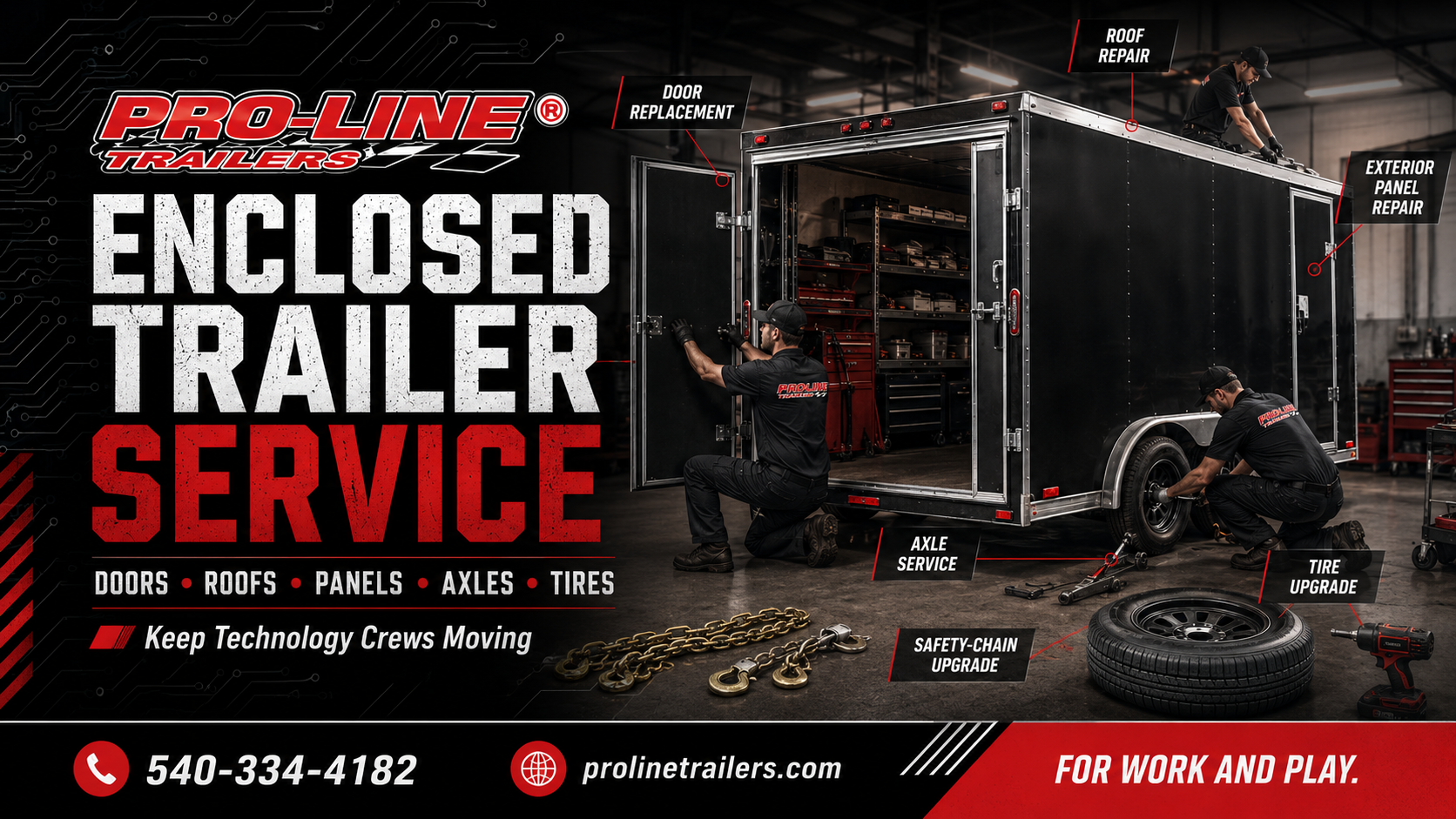
Pro-Line enclosed trailer service
Service areas include:
- Double-door replacement
- Roof replacement
- Panel replacement
- Safety-chain upgrades
- Axle service
- Tire upgrades
- Brake service
- Wiring and lighting repair
- Parts installation
- General trailer inspections
The goal is simple:
Keep the trailer safe, useful, and ready for the work.
Frequently asked questions
How do I know whether my enclosed trailer roof needs replacement?
Visible leaks, repeated seam failure, corrosion, soft roof areas, sagging interior material, and widespread damage may indicate that replacement makes more sense than another patch. A professional inspection can confirm the condition.
Can damaged enclosed trailer doors be replaced?
Yes. Replacement may be appropriate when hinges, panels, frames, latches, or seals have extensive damage or no longer align correctly.
What causes uneven trailer tire wear?
Possible causes include incorrect tire pressure, overloading, poor weight distribution, axle misalignment, worn suspension parts, damaged bearings, or incorrect tires.
How often should trailer axles and bearings receive service?
Service frequency depends on mileage, load, operating conditions, manufacturer guidance, and trailer use. Heavy commercial use may require more frequent inspection than occasional recreational towing.
Why should I upgrade trailer safety chains?
Worn, damaged, undersized, or poorly attached chains may not provide reliable backup protection. Proper chains and attachment points improve towing safety.
Does Pro-Line service trailers that were purchased elsewhere?
Contact Pro-Line Trailers with the trailer type and repair need. The service team can review the job and available options.
Technology depends on reliable field support
Data centers, communications systems, fiber networks, and electrical infrastructure depend on skilled crews doing physical work.
Those crews depend on tools, parts, equipment, transportation, and reliable trailers.
The cloud may run through servers and networks.
The work still travels on wheels.
Keeping the trailer maintained helps keep the crew moving.
Schedule enclosed trailer service
Do not wait for a damaged door, leaking roof, worn axle, failing tire, or weak safety chain to take the trailer off the road.
Call Pro-Line Trailers to schedule enclosed trailer service or discuss:
- Double-door replacement
- Roof replacement
- Panel replacement
- Safety-chain upgrades
- Axle service
- Tire upgrades
Visit www.prolinetrailers.com to explore trailer inventory and service options.
Shop trailer parts and accessories.
Pro-Line Trailers: For Work and Play.