Every cloud application, AI request, video stream, online payment, and connected device depends on physical infrastructure.
Before a tech center processes its first request, crews must clear the site, move equipment, install electrical systems, run fiber, connect backup power, test equipment, and prepare the facility for ongoing maintenance.
That work requires skilled people, dependable equipment, and organized transportation.
Trailers do not operate the servers or replace specialized technology systems. They support the people who build, connect, service, and maintain the physical infrastructure behind modern technology.
For contractors and field-service businesses, the right trailer can protect expensive tools, improve jobsite organization, reduce wasted trips, and help crews respond faster.
How do trailers support commercial-center work?
Trailers support commercial construction by moving equipment, securing tools, hauling materials, organizing field operations, and creating mobile storage or workspace.
The right trailer depends on the crew’s job.
A site-development contractor may need a dump or equipment trailer. An electrical or fiber crew may need an enclosed trailer with organized storage. A maintenance team may need secure access to parts, tools, testing equipment, and emergency-response supplies.
Here are seven practical ways trailers support commercial-center construction and technology crews.
1. Site preparation and debris removal
Commercial projects begin long before servers arrive.
Crews must prepare land, move materials, remove debris, and support ongoing construction activity. Dump trailers give contractors a practical way to transport loose material and handle jobsite cleanup.
Common uses may include:
- Hauling construction debris
- Moving gravel, soil, or landscaping material
- Supporting site cleanup
- Transporting smaller bulk loads
- Removing packaging and discarded material
A dump trailer should match the material, load weight, towing vehicle, axle capacity, and unloading requirements.
The biggest trailer is not automatically the right trailer. Contractors should calculate how much the loaded trailer will weigh and confirm that the tow vehicle can safely control it.
Best fit: Dump trailers and heavy-duty utility trailers
2. Moving compact equipment and machinery
Construction and infrastructure crews often need to move compact machinery between sites.
Equipment trailers may support the transportation of:
- Skid steers
- Mini excavators
- Compact loaders
- Trenchers
- Small lifts
- Jobsite attachments
Buyers should look beyond deck length. They also need to consider payload capacity, axle ratings, ramp design, tie-down points, brake systems, equipment width, and weight distribution.
A trailer may have enough floor space while still lacking the capacity to carry the machine safely.
Crews should compare the equipment’s operating weight with the trailer’s available payload, not just the trailer’s gross vehicle weight rating.
Best fit: Equipment trailers and gooseneck equipment trailers
3. Protecting electrical tools and testing equipment
Commercial centers depend on extensive electrical infrastructure.
Electrical contractors may carry conduit tools, wire, meters, testing equipment, ladders, hardware, personal protective equipment, and job-specific supplies.
An enclosed trailer can protect that equipment from weather while giving the crew a more secure and organized setup.
Useful features may include:
- Interior shelving
- Lockable cabinets
- Ladder storage
- LED interior lighting
- E-track or tie-down systems
- Side-door access
- Workbench space
- Roof vents
- Additional locks
Organization matters because wasted time adds up.
When a crew cannot find the right connector, testing tool, or piece of hardware, work slows down. A well-planned trailer gives frequently used equipment a defined location and helps crews restock more efficiently.
Best fit: Enclosed cargo trailers and contractor-oriented custom layouts
4. Supporting fiber and network installation crews
Fiber and network contractors work with cable, connectors, splicing tools, test equipment, reels, ladders, and other sensitive gear.
They often need more than open hauling space.
An enclosed trailer can help crews keep equipment dry, reduce exposure to theft, and create storage zones around their daily workflow.
A fiber or network trailer setup may benefit from:
- Cable and reel storage
- Bins for connectors and small components
- Protected storage for test equipment
- Side access for frequently used tools
- Interior lighting
- Work surfaces
- Ventilation
- Exterior ladder racks
- Clearly marked inventory zones
Buyers should think carefully about door placement.
A rear ramp may work well when crews load carts or larger equipment. Barn doors may provide simpler cargo access. A well-positioned side door can help technicians reach everyday tools without unloading the entire trailer.
The layout should follow how the crew works, not simply how the empty trailer looks on the lot.
Best fit: Enclosed cargo trailers with organized interior storage
5. Helping backup-power and generator technicians respond
Commercial centers require reliable power and backup systems.
Generator, battery, and electrical-support technicians may need to transport service tools, replacement parts, diagnostic equipment, cables, fluids, and safety gear.
A trailer can help these crews keep essential support equipment organized and ready for dispatch.
Before choosing a trailer, buyers should determine:
- What equipment stays in the trailer
- What equipment gets loaded for specific jobs
- Whether the crew needs open or enclosed access
- How much the tools and parts weigh
- Whether liquids or batteries require special handling
- How quickly technicians need to reach critical supplies
- Whether future equipment will increase the load
Businesses should not assume that unused floor space equals unused payload.
Shelving, cabinets, batteries, generators, spare parts, and mounted equipment all reduce the trailer’s remaining carrying capacity.
Best fit: Enclosed service trailers, equipment trailers, or custom contractor setups
6. Creating mobile storage and field-support space
Large projects often involve multiple contractors, shifting work areas, and tight schedules.
A trailer can give a crew a defined place to store plans, tools, safety equipment, parts, and daily supplies near the work area.
Some businesses may also configure enclosed trailers to support:
- Field coordination
- Equipment staging
- Secure document storage
- Tool check-in and check-out
- Small work surfaces
- Temporary crew support
- Mobile service operations
A trailer can become more than transportation, but the use case must drive the build.
Adding desks, cabinets, electrical systems, climate control, batteries, or mounted equipment changes the trailer’s weight, balance, power requirements, and service needs.
Businesses planning a specialized build should select the trailer platform before finalizing the interior system.
Best fit: Enclosed trailers and purpose-planned custom builds
7. Supporting maintenance and emergency response
Commercial-center work does not stop after construction.
Facilities need inspections, repairs, upgrades, replacement parts, electrical service, network maintenance, security support, and emergency response.
A properly equipped trailer can help service teams carry the tools and materials they need when response time matters.
Maintenance-oriented trailer setups may support:
- Replacement-part storage
- Diagnostic equipment
- Cable and electrical supplies
- Safety equipment
- Portable lighting
- Repair tools
- Temporary barriers or jobsite controls
- Weather-protected equipment transport
The best setup allows technicians to see what they have, access it quickly, and identify what needs restocking.
A poorly organized trailer can become a moving storage pile. A planned trailer can become a working field asset.
Best fit: Enclosed cargo trailers, utility trailers, and service-oriented custom layouts
Which trailer type fits each technology crew?
| Crew or Application | Likely Trailer Type | Features to Consider |
|---|---|---|
| Site preparation | Dump trailer | Payload, hydraulic system, axle rating, tarp, material type |
| Compact-equipment transport | Equipment trailer | Deck length, ramps, brakes, tie-downs, payload |
| Electrical contractor | Enclosed trailer | Shelving, ladder storage, lighting, side access, security |
| Fiber installation crew | Enclosed trailer | Cable storage, workbench, bins, lighting, weather protection |
| Generator technician | Enclosed or equipment trailer | Payload, parts storage, wide access, secure equipment |
| Network service team | Enclosed trailer | Protected storage, lighting, organized test-equipment access |
| Field coordination | Custom-friendly enclosed trailer | Interior height, power planning, workspace, ventilation |
| Maintenance response | Enclosed or utility trailer | Fast access, inventory zones, locks, parts organization |
What should contractors check before buying?
Technology and infrastructure crews should start with the actual job, not the trailer category.
Ask these questions before buying:
What will the trailer carry every day?
List the tools, equipment, parts, materials, shelves, cabinets, and mounted accessories.
Estimate the total weight. Leave room for growth.
What needs weather protection?
Sensitive tools, electronics, connectors, testing equipment, and documents may justify an enclosed trailer.
What needs security?
An enclosed trailer provides a layer of protection, but buyers should also consider upgraded locks, door construction, storage layout, and where the trailer will sit overnight.
How will the crew access the equipment?
Think about rear ramps, barn doors, side doors, ladder racks, shelving height, and aisle space.
What can the tow vehicle safely handle?
Match the trailer’s fully loaded weight to the tow vehicle’s rated towing capacity, hitch setup, brake controller, payload limits, and operating conditions.
Will the trailer need modifications?
Plan for shelving, lighting, ventilation, workbenches, power, air conditioning, racks, cabinets, or exterior accessories before choosing the base platform.
How will the business service the trailer?
Brakes, bearings, tires, wiring, suspension, lights, roof components, doors, and safety systems all require attention over time.
Common mistakes technology contractors should avoid
Buying only for today’s load
Businesses grow. Equipment changes. Crews add tools.
A trailer that barely fits today may become overloaded or disorganized quickly.
Ignoring the weight of interior upgrades
Shelving, cabinets, batteries, generators, workbenches, and climate-control equipment all consume payload.
Choosing size without considering access
A larger trailer does not help if the crew cannot reach its most-used equipment efficiently.
Treating empty weight as operating weight
The trailer must perform safely after the business loads every tool, part, accessory, and piece of equipment.
Building the interior before confirming the platform
The trailer provides the foundation. Size, axle capacity, interior height, door placement, floor strength, and towing requirements should guide the build.
Skipping a long-term service plan
Even a well-built trailer needs regular inspection and maintenance to stay road-ready.
The Pro-Line advantage
Pro-Line Trailers helps businesses compare trailer types based on how the trailer will actually work.
Contractors can explore enclosed, utility, dump, equipment, gooseneck, and other trailer options while also considering financing, accessories, service, repairs, and future customization needs.
That matters because the purchase does not end when the trailer leaves the lot.
A work trailer needs to keep supporting the business through changing jobs, growing crews, regular maintenance, and years of use.
Pro-Line Trailers also provides trailer service and repair in Rocky Mount, Virginia, and offers trailer parts and accessories through Pro-Line Trailer Parts.
Frequently asked questions
What type of trailer works best for an electrical contractor?
Many electrical contractors choose enclosed trailers because they protect tools and materials from weather while supporting shelving, lighting, ladder storage, and secure organization. The right size depends on the crew’s equipment, total weight, tow vehicle, and access needs.
Can fiber crews work from an enclosed trailer?
An enclosed trailer can support tool storage, cable organization, equipment protection, and some field-work functions. Any specialized electrical, climate-control, or communications systems require proper planning and qualified installation.
Are utility trailers useful on commercial-center projects?
Yes. Utility trailers can support open-access hauling of supplies, tools, landscaping equipment, barriers, and jobsite materials when weather protection and enclosed security matter less.
What trailer features help protect expensive tools?
Enclosed construction, quality locks, organized shelving, interior lighting, tie-down systems, protected cabinets, and thoughtful door placement can help crews secure and manage valuable equipment.
How much payload should a contractor trailer have?
The trailer needs enough payload for every tool, shelf, cabinet, mounted accessory, spare part, and piece of equipment it will carry. Buyers should calculate the estimated loaded weight and leave capacity for future needs.
Can Pro-Line help with trailer service and accessories?
Yes. Pro-Line offers trailer sales, service, repair, inspections, parts installation, and access to trailer parts and accessories. Call 540-334-4182 to discuss the trailer and support services your business needs.
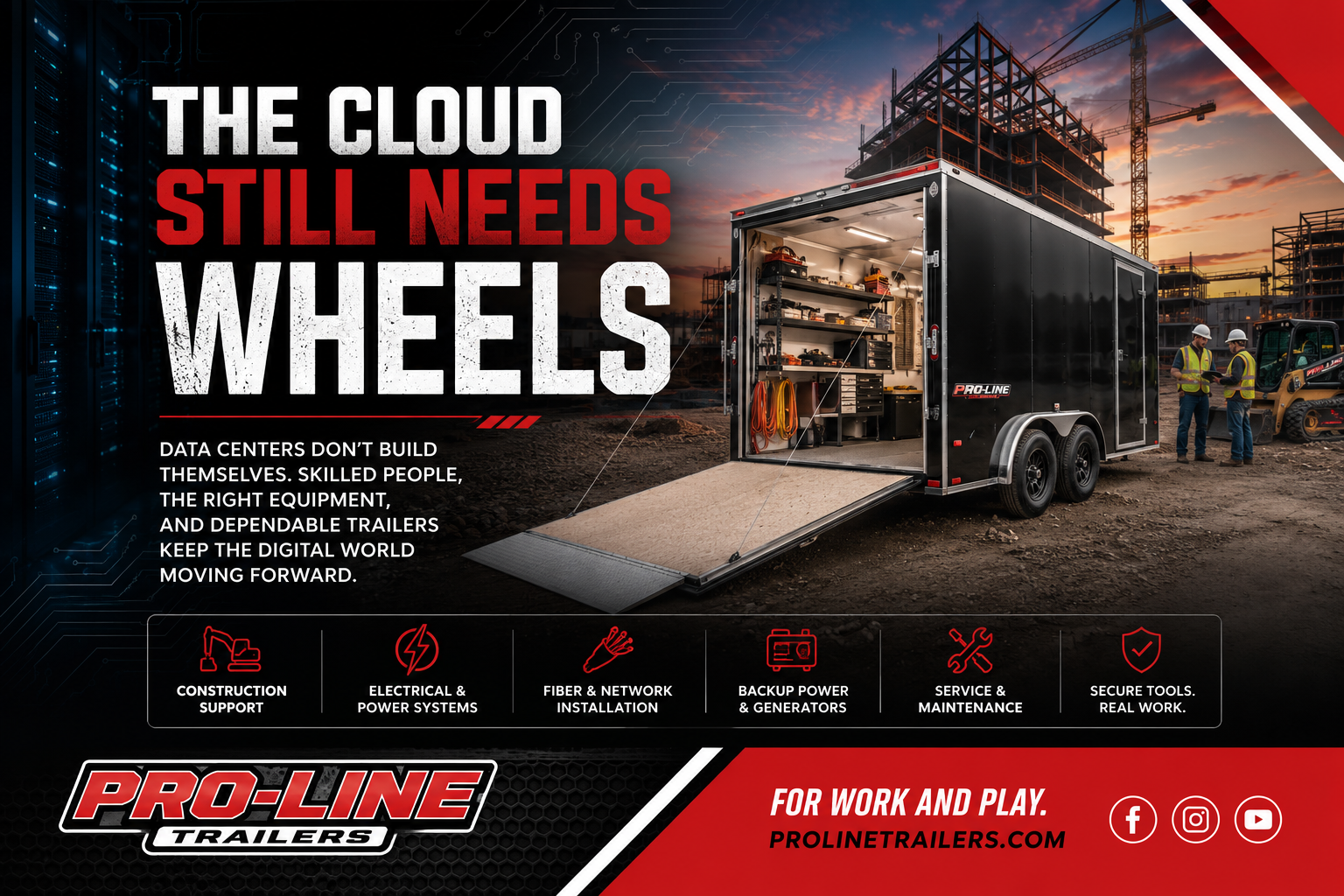
The cloud still needs wheels
Technology may look weightless to the people using it.
The work behind it is not.
Commercial centers depend on construction crews, electricians, fiber installers, equipment operators, service technicians, logistics teams, and skilled trades.
Those teams need dependable ways to move tools, equipment, materials, and support systems.
The right trailer helps them protect what they carry, stay organized, reduce wasted time, and keep the project moving.
Find a trailer built for serious work
Need a trailer for construction, electrical, fiber, network, maintenance, or field-service work?
View current inventory or call Pro-Line Trailers
For trailer shelving, lighting, locks, tie-downs, replacement parts, and accessories, visit our trailer parts department.
Pro-Line Trailers: For Work and Play.