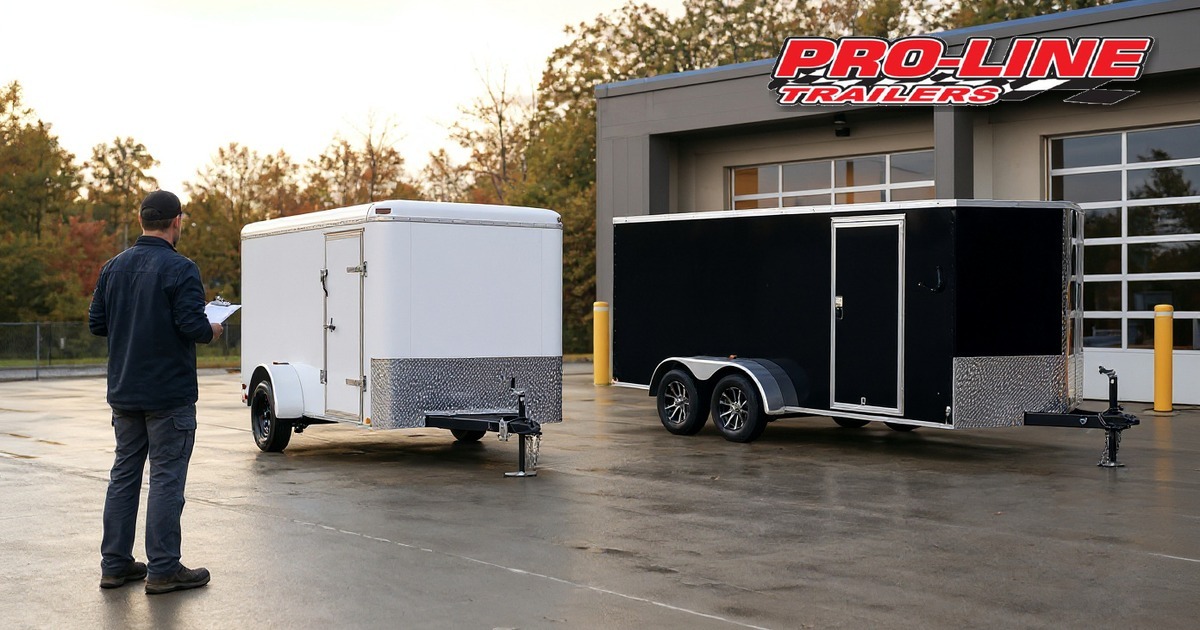
Buying a trailer is not just a question of new versus used. It is a question of what you need it to carry, how often you will use it, what condition it is in today, and what it will take to put it to work safely.
A used trailer may be the right answer if its condition and fit are verified. A new trailer may make it easier to choose the configuration, options, and support that match the job. Neither choice comes with a guarantee that it is right for every buyer. Start with a close inspection and honest math.
Do not let the sticker price make the whole decision
A lower number gets attention because it is immediate and easy to compare. The harder costs arrive later: tires, brakes, wiring, bearings, deck repair, paperwork, travel, downtime, or a layout that never fit the work. New-trailer options can also add cost without serving a real job.
Buyers make better decisions when the offer reduces uncertainty. Compare the specific unit, its condition, work required before use, explicit transaction terms, verified availability, and support after purchase. Real photos, readable identification, documented ratings, stated fees, and an honest pickup or completion timeline are more useful than artificial urgency.
Start with the job, not the listing
Before looking at trailers, write down what you haul: loaded weight, dimensions, frequency, towing vehicle, and needed loading equipment, access, weather protection, or brakes. Leave room for next year’s work, not only today’s lightest load.
Capacity is more than a sales description. Check the trailer’s ratings and your tow vehicle’s limits, then plan to stay within them. The NHTSA tire safety guide notes that proper inflation, observing tire and vehicle load limits, and regular inspection help reduce tire-failure risk.
The 12-point new-or-used trailer checklist
1. Title, VIN, and documents
Confirm the VIN on the trailer matches the title, registration, bill of sale, and any applicable finance-release paperwork. Look for altered, missing, or hard-to-read markings. Ask for service records and documentation for major repairs or added equipment. Requirements vary, so verify transfer steps with the appropriate local authority before the deal.
2. Data plate and ratings
Read the data plate or certification label, not just the listing. Record the gross vehicle weight rating, gross axle weight ratings, tire and wheel information, and VIN. Make sure the ratings and towing setup fit the load. If the plate is absent or unreadable, do not guess at capacity.
3. Frame, crossmembers, and welds
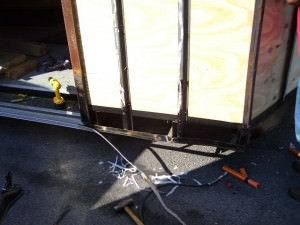
Walk the frame in good light. Look for bent rails, deep corrosion, cracked paint around welds, fresh paint hiding repairs, damaged crossmembers, and signs of overload or impact. Surface rust differs from corrosion that has weakened metal. Ask what caused used-trailer repairs and who performed them. On a new trailer, inspect build quality before accessories and paint distract from the basics.
4. Floor or deck
On an open trailer, inspect wood for soft spots, split boards, loose fasteners, rot, and uneven replacement boards. Check steel or aluminum decks for corrosion, dents, cracking, and traction. On an enclosed trailer, inspect the floor inside and underneath when possible. A deck that handles general cargo may not suit concentrated equipment weight without the right layout and support.
5. Tires: age, condition, and match
Tires deserve more than a glance at tread. Check sidewalls for cracks, cuts, bulges, weathering, uneven wear, damage, and mismatched sizes or load ranges. Read the DOT date code, and check cold inflation against tire and trailer information. The NHTSA guidance on tire safety calls out proper pressure, load limits, and inspections for cuts and irregularities. A trailer sitting unused can still have aging tires.
6. Bearings and hubs
Spin each wheel if practical. Check for roughness, resistance, wobble, or heat after a suitable short road test. Look for grease leakage, damaged seals, missing dust caps, and neglected maintenance. Ask when bearings were last serviced.
7. Brakes and breakaway system
If the trailer has brakes, confirm which axles are braked and test the brake controller connection during a suitable tow. Inspect wiring, backing plates, drums or rotors, and visible hardware for damage or corrosion. Check the breakaway cable, battery, and switch. Do not assume brakes work because the trailer has a plug. A qualified inspection can help when condition is uncertain.
8. Lights and wiring
Connect the trailer to the tow vehicle and test running lights, brake lights, turn signals, hazards, marker lights, license-plate light, and reverse lights if equipped. Look underneath for unsecured, chafed, corroded, spliced, or exposed wiring. Check the connector for bent pins and corrosion. Lighting issues can be simple, but they can also point to broader wiring neglect.
9. Coupler, jack, and safety chains
Make sure the coupler size and type match the towing setup. Inspect it for wear, cracks, damage, and a latch that fully closes. Raise and lower the jack through its travel, then inspect the mounting area. Check safety chains, hooks, attachment points, and breakaway cable routing for damage and usable length. This is a connection system, not a place to accept “close enough.”
10. Doors, ramps, roof, and seals
Open, close, latch, and secure every door, ramp, gate, vent, and access point. On enclosed trailers, inspect the roof, corners, seams, interior walls, and floor for stains, soft spots, leaks, daylight, or seal failure. Check ramp springs, hinges, cables, and traction. Water intrusion can become expensive long before it is obvious outside.
11. Modifications and added equipment
Ask about alterations such as added tie-downs, racks, electrical systems, ramp changes, axle swaps, suspension changes, repairs, or homemade reinforcements. Determine whether they affect capacity, balance, loading, serviceability, or paperwork. Unclear work without documentation deserves a closer look.
12. Total repair and upgrade cost
Add the purchase price to work needed before the trailer can do your job. Include tires, bearings, brakes, lights, deck repairs, seals, corrosion work, tie-downs, ramp work, a spare tire, and configuration changes. Consider downtime and travel. A lower upfront number can stop being a bargain when required work is counted honestly.
Make the choice that fits the work
A used trailer can be smart when it has the right ratings and layout, verified condition, and a sensible repair plan. It may also be an available configuration without an order wait. A new trailer can make selecting the right size, axle package, doors, ramps, and tie-downs simpler. The better choice depends on the specific unit and the work behind it.
Once you buy, load it deliberately. NHTSA advises drivers to tie down cargo, secure large objects directly to the vehicle or trailer, avoid excessive loads, and double-check the load before driving. Review its load-securement guidance before the first haul and make cargo checks part of every trip.
Talk through the trailer before you decide
Bring your load list, tow-vehicle details, and questions to Pro-Line Trailers. Our team can help you compare available new and preowned trailers, parts, and service options around the work you need to do. Call (540) 334-4182 or visit prolinetrailersales.com to start the conversation.