One of the biggest mistakes trailer buyers make is assuming every trailer is basically the same.
At first glance, two trailers may look nearly identical online:
- same size
- same style
- similar pictures
But then you notice one costs thousands more.
That leads to the obvious question:
Why are trailer prices so different?
At Pro-line Trailers, this is one of the most common conversations we have with buyers across Virginia and the East Coast.
And honestly, it is a smart question.
Because sometimes you are paying for real long-term value.
And sometimes you are just paying for branding or features you may not actually need.
The key is knowing the difference before you buy.
The Cheapest Trailer Is Not Always The Best Value
Price matters.
Every buyer has a budget.
But focusing only on the upfront number can create expensive problems later.
A lower-priced trailer may cost more long term because of:
- repairs
- downtime
- poor towing performance
- lower payload capacity
- shorter lifespan
- early replacement
That is why smart buyers compare more than price alone.
What Actually Affects Trailer Pricing?
Several factors influence trailer cost.
Some matter a lot.
Some matter less depending on how you use the trailer.
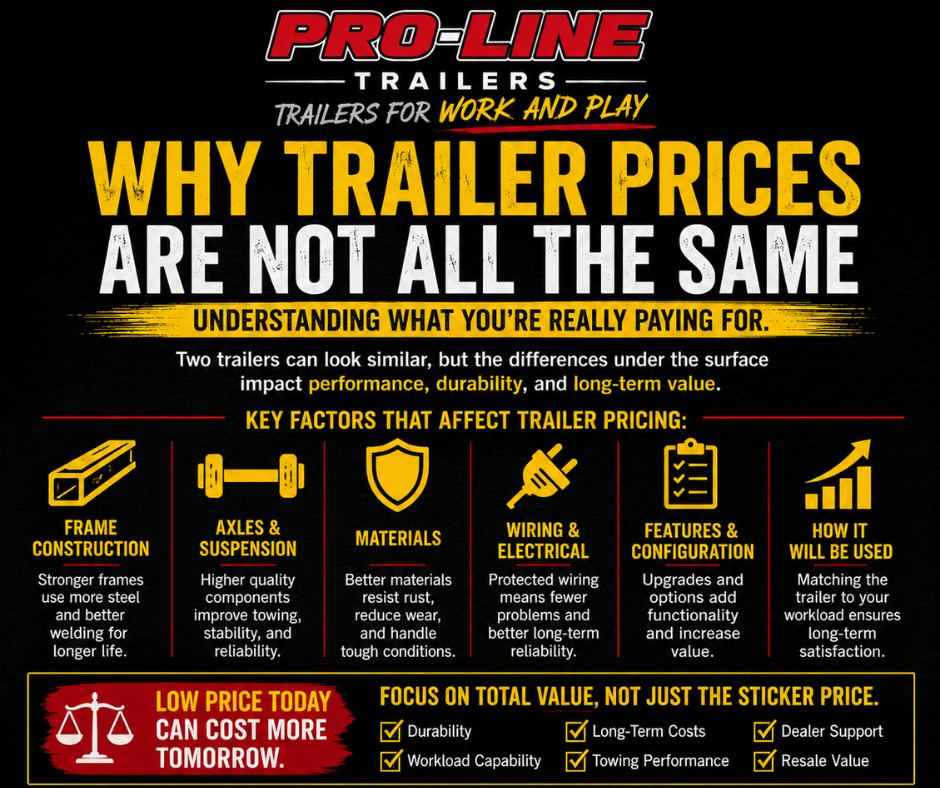
Frame Construction
The frame is one of the biggest differences between trailer price points.
A stronger frame generally means:
- better durability
- improved towing stability
- longer trailer life
- better support under heavy loads
Cheaper trailers often reduce material strength to lower production costs.
That may work for light occasional use.
It usually does not work well for heavy or frequent hauling.
Axles And Suspension
Axles matter more than many buyers realize.
Higher-quality axle setups often provide:
- smoother towing
- better weight distribution
- improved reliability
- longer tire life
Tandem axle trailers also typically cost more because they are designed for greater capacity and stability.
For many commercial buyers, that added capability is worth it.
Trailer Materials
Material choice affects:
- durability
- maintenance
- weight
- corrosion resistance
Steel trailers are often more affordable upfront.
Aluminum trailers usually cost more but can reduce rust and weight issues over time.
Neither is automatically “better.”
The right choice depends on:
- your environment
- how often you haul
- what you haul
- long-term ownership goals
Wiring And Electrical Protection
This is one area buyers rarely think about until problems start happening.
Poor wiring protection can lead to:
- lighting failures
- corrosion
- brake issues
- frustrating repairs
Higher-quality wiring systems usually increase trailer reliability long term.
Features And Configuration
Two trailers of the same size can still vary heavily in price based on options.
Examples include:
- upgraded ramps
- heavier-duty flooring
- reinforced walls
- extra tie-downs
- upgraded lighting
- cabinets or interior packages
- power systems
- upgraded tires and wheels
Some buyers need those features.
Others do not.
This is why buying based only on pictures online can become misleading.
How The Trailer Will Be Used Matters Most
This is the real key.
A homeowner hauling occasionally may not need the same setup as:
- a contractor
- landscaper
- racer
- equipment operator
- small business owner
The right trailer should match:
- workload
- towing frequency
- payload needs
- long-term plans
At Pro-line Trailers, one of the biggest mistakes we see is buyers purchasing based only on price without thinking about how the trailer will actually be used.
That often leads to:
- buying twice
- expensive upgrades
- frustration later
Why Dealer Support Also Matters
Trailer ownership does not stop after the sale.
Support matters.
Things like:
- service
- parts availability
- financing
- trade-ins
- warranty support
- maintenance guidance
…all affect long-term ownership experience.
That is why many buyers prefer working with dealerships that provide support beyond simply selling the trailer.
Pro-Line offers:
- financing options
- trailer service
- parts support
- trade-ins
- real guidance before and after the sale
That long-term support becomes part of the value equation too.
What Smart Trailer Buyers Focus On
The smartest buyers compare:
- total ownership cost
- durability
- workload capability
- towing performance
- support after the sale
Not just the sticker price.
Because the goal is not finding the cheapest trailer.
The goal is finding the right trailer for the work and play you actually do.
FAQ
Why are some trailers so much cheaper?
Lower-priced trailers may use lighter materials, lower-capacity axles, simpler wiring systems, or fewer durability features.
Does a more expensive trailer always mean better quality?
Not always. Some upgrades are useful while others may not matter for your specific workload.
Are tandem axle trailers worth the extra cost?
For many heavier or commercial applications, yes. They often provide better stability and payload capability.
What matters most when comparing trailers?
Focus on how the trailer matches your hauling needs, towing frequency, durability expectations, and long-term ownership costs.
Should I buy based only on price?
Usually not. A lower upfront price can become more expensive over time if the trailer does not properly fit the workload.
Ready To Compare Trailers The Right Way?
If you are shopping for a trailer and trying to understand what actually matters before you buy, start with the work first.
Tell us:
- what you haul
- how often you tow
- what problems you are trying to solve
We will help you compare real options that fit your workload and budget.
Call 540-334-4182
Visit our website today
Or shop trailer parts
No pressure. Just real guidance from people who work with trailers every day.